Neurofeedback and PBM Care: How Two Protocols Work Together
Why Combine Two Approaches?
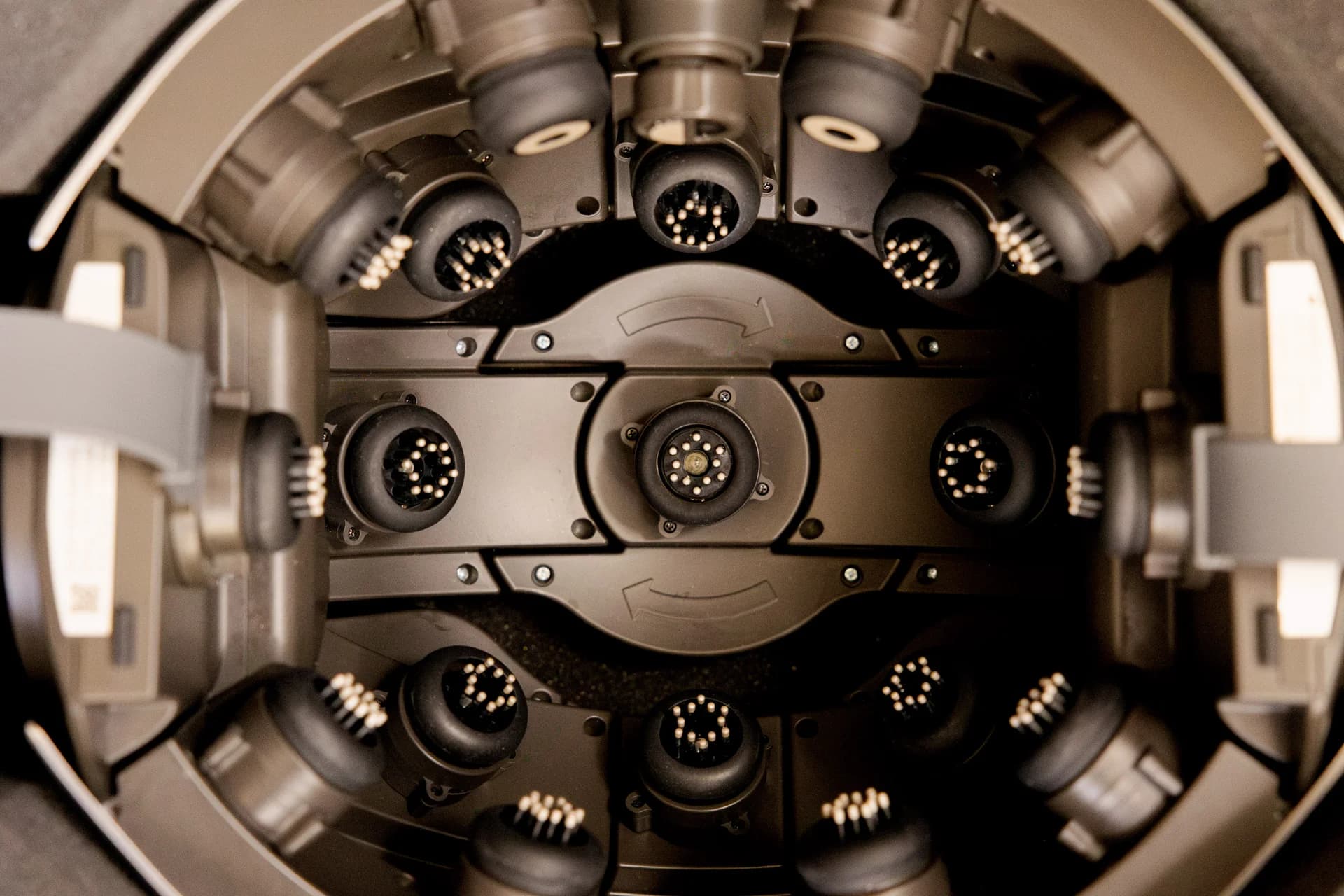
In neurotherapy, as in most areas of health, a single approach does not always deliver the most comprehensive results. At Inna MediSync, we have the ability to offer clients two distinct, evidence-informed protocols — neurofeedback and Photobiomodulation (PBM Care) — both delivered through the iSyncMe device. Used together as part of a personalised programme, they address brain health from two complementary angles.
This article explains what each protocol does, how they complement each other, and who may benefit most from a combined approach.
What Neurofeedback Does
Neurofeedback is a form of brain training that uses real-time monitoring of your brainwave activity to help your brain learn healthier patterns. During a session, sensors on the scalp read your EEG signal, and a visual or auditory feedback system responds to your brain's activity. When your brain produces patterns associated with better regulation, the feedback responds positively. Over time, the brain learns to maintain these patterns more consistently.
Neurofeedback primarily works at the level of brainwave regulation:
- Training attention networks to sustain focus
- Calming overactive stress-response circuits
- Balancing brainwave ratios associated with mood and emotional regulation
- Improving the brain's ability to transition between states — from alertness to rest, for example
The key mechanism is operant conditioning — your brain receives feedback on its own activity and gradually learns to self-regulate. This is why neurofeedback requires a course of sessions: lasting change comes from repeated practice, much like developing any skill.
What PBM Care Does
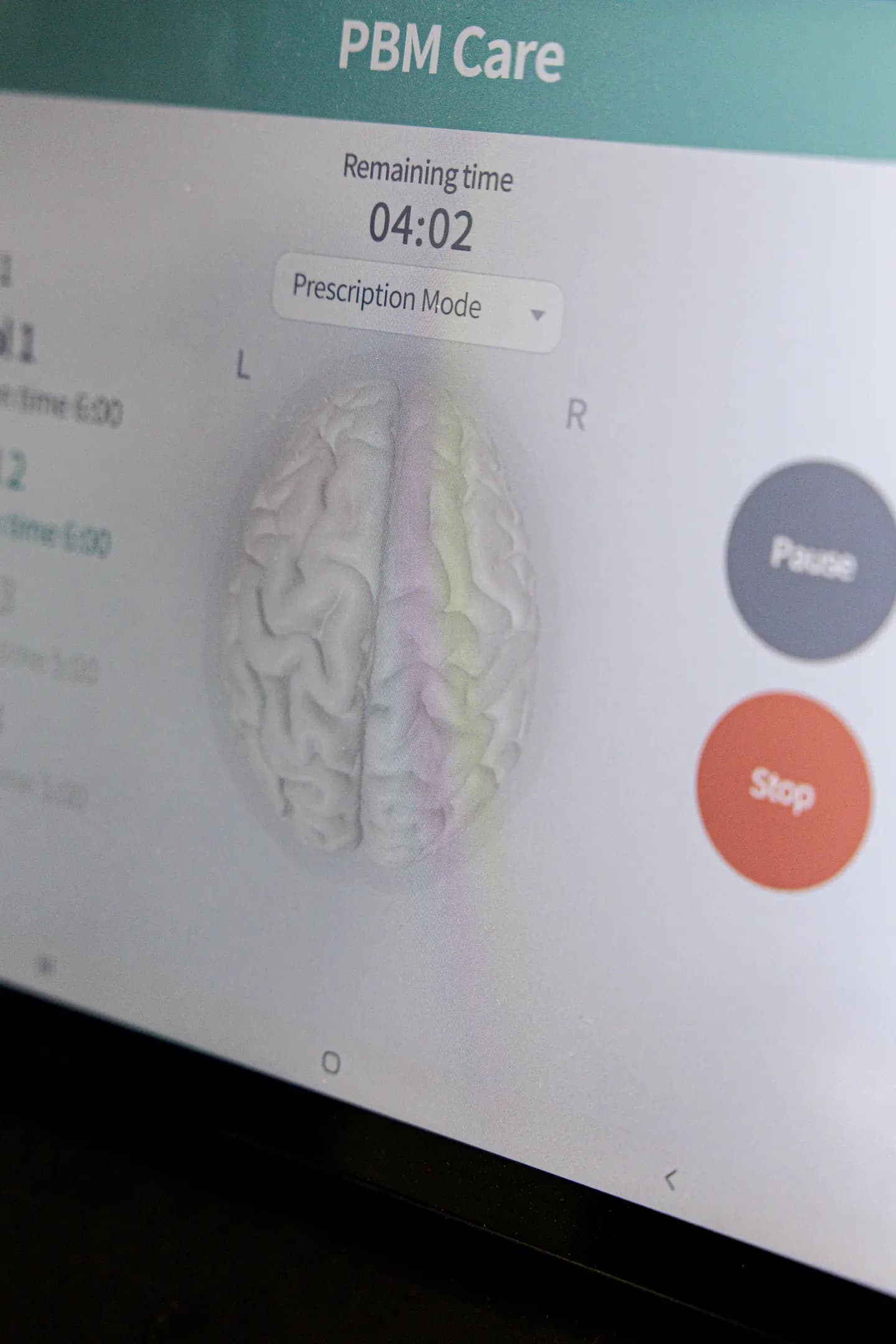
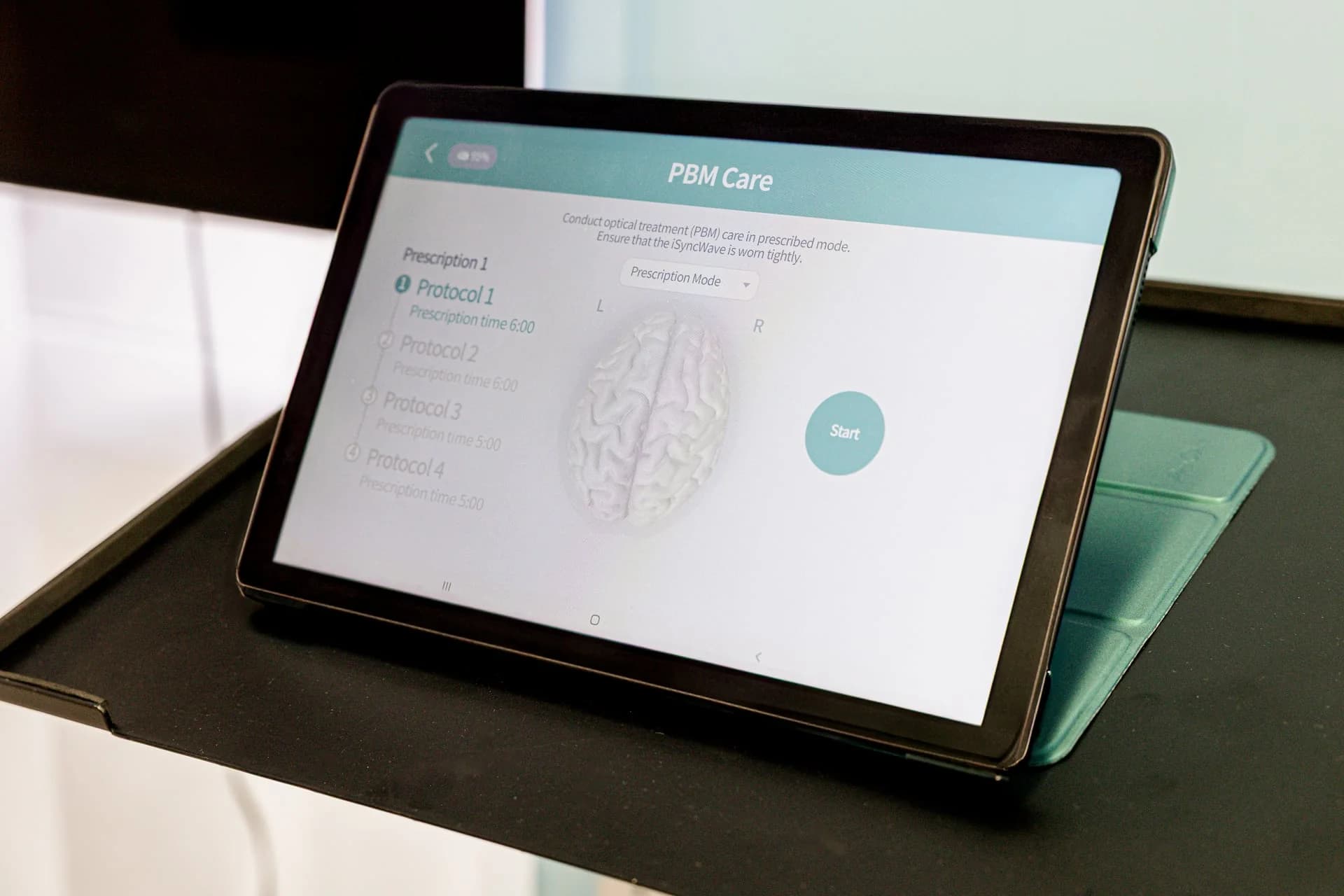
Photobiomodulation (PBM Care) takes a fundamentally different approach. Rather than training brainwave patterns, it supports the brain at the cellular level. Near-infrared light at 810nm wavelength is delivered through the scalp using the iSyncMe device, where it is absorbed by mitochondria — the energy-producing structures within brain cells.
This interaction supports the production of adenosine triphosphate (ATP), the molecule that cells use as fuel. Research suggests that the effects may include:
- Enhanced cerebral blood flow — more oxygen and nutrients reaching brain tissue
- Reduced neuroinflammation — calming inflammatory processes that can affect cognition and mood
- Increased neuronal energy — brain cells functioning with more available fuel
- Support for neuroplasticity — the brain's ability to form new connections
In essence, PBM Care supports the biological environment in which the brain operates, while neurofeedback trains the functional patterns of brain activity.
How They Complement Each Other
Think of it this way: neurofeedback teaches the brain what to do; PBM Care helps ensure the brain has the cellular energy and biological support to do it effectively.
Consider a client working on improving focus. Neurofeedback trains the frontal brain regions to produce more efficient brainwave patterns associated with sustained attention. Meanwhile, PBM Care supports the energy production and blood flow in those same regions, potentially enhancing the brain's capacity to respond to the training.
This is not a guaranteed outcome — individual responses vary — but the logic of combining a training-based approach with a cellular-support approach is consistent with what the research literature suggests about neuroplasticity and brain health.
Neurofeedback trains the pattern. PBM Care supports the cellular environment. Together, they offer a more comprehensive approach to brain health than either protocol alone.
Delivered in Separate Sessions
An important clarification: at Inna MediSync, neurofeedback and PBM Care are delivered in separate, dedicated sessions — not simultaneously. Each protocol has its own session, ensuring your brain receives the full benefit of each approach without dilution.
Your practitioner designs a schedule that sequences the sessions optimally. For some clients, this means alternating protocols across the week; for others, it may mean completing a focused block of one protocol before introducing the second. The approach depends entirely on your Brain Mapping results and your individual goals.
Who Benefits Most from a Combined Protocol?
While any client can potentially benefit from combining neurofeedback and PBM Care, certain profiles tend to respond particularly well to the integrated approach:
- ADHD and attention difficulties: Neurofeedback targets the brainwave dysregulation characteristic of ADHD, while PBM Care supports the frontal cortex energy demands that sustained attention requires
- Anxiety and stress: Neurofeedback helps calm overactive neural circuits, while PBM Care may reduce neuroinflammation associated with chronic stress
- Cognitive decline and brain fog: The combination of brainwave training and cellular energy support addresses both functional patterns and the biological underpinnings of cognitive performance
- Peak performance: Professionals and athletes seeking to optimise already-healthy brain function may benefit from both sharpening neural efficiency and maximising cellular energy availability
- Sleep difficulties: Training the brain's ability to transition between states (neurofeedback) while supporting the cellular processes involved in sleep architecture (PBM Care)
The Inna MediSync Approach
Every combined programme at Inna MediSync in Romford begins with a comprehensive Brain Mapping (qEEG) assessment. This provides the objective data our practitioners need to determine whether a combined protocol is appropriate, and if so, how to sequence and prioritise the sessions.
We do not recommend a combined approach by default — it depends on what your brain map reveals and what you are trying to achieve. Some clients benefit most from a focused neurofeedback programme; others from PBM Care alone; and many from a thoughtful combination of both.
This is one of the advantages of using the iSyncMe device: because both protocols are available through a single instrument, we can adapt your programme as your brain changes, without needing to refer you elsewhere or introduce new equipment.
What a Combined Programme Looks Like in Practice
A typical combined programme at Inna MediSync might involve two to three sessions per week over a course of several months. One session might focus on neurofeedback — training specific brainwave patterns identified in your brain map. The next session might focus on PBM Care — supporting the cellular energy environment in the brain regions being trained.
Throughout the programme, your practitioner monitors your progress through regular check-ins and, where appropriate, follow-up brain maps that objectively measure change. This allows us to refine the balance between neurofeedback and PBM Care as your brain responds, ensuring the programme evolves with you rather than following a rigid template.
Many clients find that the combination produces a sense of cumulative improvement — each session building on the last, with changes that feel more stable and sustained over time. Of course, individual experiences vary, and we are always honest about what can and cannot be expected.
The Evidence Base
Both neurofeedback and photobiomodulation have independent bodies of research supporting their use. Neurofeedback has been studied extensively in the context of ADHD, anxiety, sleep, and cognitive performance, with the American Academy of Pediatrics rating it as a Level 1 intervention for ADHD. Photobiomodulation research has grown rapidly over the past decade, with studies published in peer-reviewed journals examining its effects on cerebral blood flow, mitochondrial function, and neuroinflammation.
The research into combining the two approaches is still emerging, but the theoretical rationale is well-supported by what we know about neuroplasticity: a brain that is both well-trained (neurofeedback) and well-fuelled (PBM Care) is better positioned to make lasting functional changes.
Ready to Find Out What Your Brain Needs?
The first step is always understanding where you are now. A Brain Mapping assessment reveals the specific patterns and dynamics of your brain, giving us the information we need to recommend the right approach — whether that is neurofeedback, PBM Care, or a personalised combination of both.
Get in touch to book your assessment or to discuss your goals. We will guide you through the options honestly, with no pressure and no obligation.
Inna MediSync Clinical Team
Neurotherapy Specialists
The Inna MediSync clinical team brings together certified neurotherapy practitioners with expertise in QEEG brain mapping and neurofeedback. Every article is reviewed for clinical accuracy and reflects our commitment to evidence-informed practice.
Continue Reading
Ready to Explore Neurotherapy?
Take the first step towards understanding your brain. Book a free consultation with our clinical team.