Depression
Rewiring the Brain for Recovery
Depression has a measurable neural signature. QEEG-guided neurofeedback addresses the underlying patterns of brain activity associated with low mood, helping to restore balance and resilience — without relying solely on medication.
Adding life to years.
Human care powered by advanced clinical technology.
What Does Depression Look Like in the Brain?
Depression is not simply a chemical imbalance — it is a complex pattern of brain dysregulation. One of the most well-documented findings in QEEG research is frontal alpha asymmetry: the left frontal cortex, associated with positive emotions and approach behaviour, shows reduced activity relative to the right. This asymmetry is strongly linked to depressive symptoms.
Beyond frontal asymmetry, brain maps of individuals with depression often reveal excess slow-wave activity (theta) in frontal regions, reduced overall alpha power, and disrupted connectivity between brain areas. These patterns help explain the fatigue, cognitive fog, emotional flatness, and withdrawal that characterise the condition.
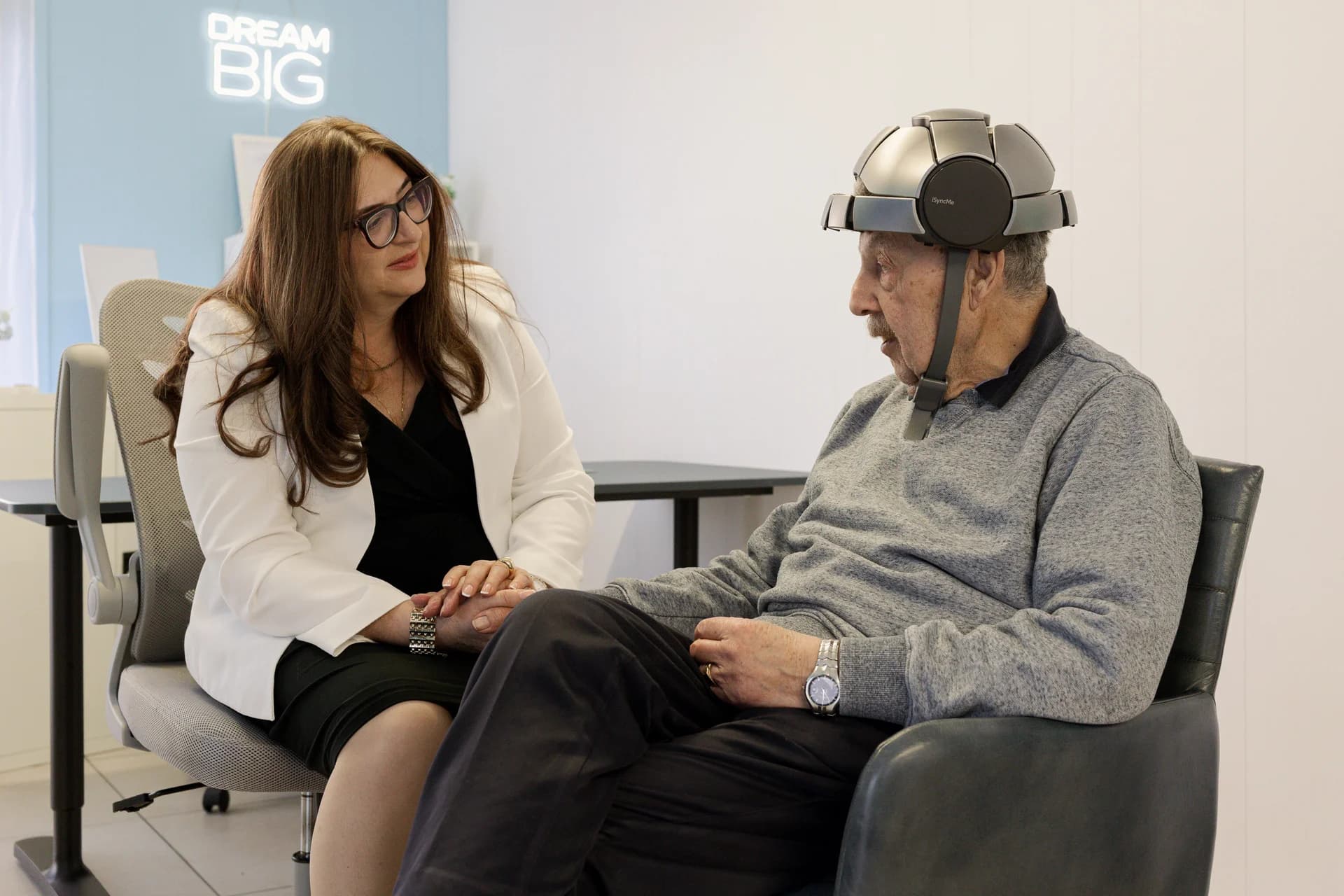
The hopeful reality is that these patterns are not permanent. Neurofeedback trains the brain to rebalance its activity — strengthening left frontal engagement, restoring healthy alpha rhythms, and supporting emotional regulation. Additionally, transcranial photobiomodulation (tPBM) may support recovery by increasing neuronal energy and enhancing cerebral blood flow. Both approaches can be delivered via the iSyncMe device, working alongside therapy and medication as a complementary pathway to recovery.
How Neurofeedback Supports Recovery from Depression
Correcting Frontal Alpha Asymmetry
Neurofeedback can train the brain to increase left frontal alpha activity relative to the right. This addresses one of the most robust biomarkers of depression identified in QEEG research.
Restoring Emotional Regulation
By training frontal and prefrontal brain regions, neurofeedback supports the brain's capacity for emotional processing, helping individuals move from emotional numbness towards healthy emotional responsiveness.
Reducing Cognitive Fog
Excess slow-wave activity in the frontal lobes contributes to the mental sluggishness associated with depression. Neurofeedback trains the brain to produce more efficient patterns, improving clarity and motivation.
Complementing Other Treatments
Neurofeedback works alongside antidepressant medication, psychotherapy, and lifestyle interventions. It targets the neurological dimension of depression that other approaches may not directly address.
Ready to find out if this approach is right for you? Our clinical team can guide you.
What to Expect
Assessment
A comprehensive QEEG brain map identifies your specific depression-related patterns, including frontal asymmetry, slow-wave excess, and connectivity disruptions.
QEEG · 60–90 minProtocol Design
Your clinician designs a targeted neurofeedback protocol based on your map. Depression protocols are highly individualised — no two brains are alike.
Personalised · Evidence-BasedTraining Sessions
Gentle 30–40 minute sessions where your brain receives real-time feedback. Many clients describe the sessions as calming and find them a welcome part of their recovery routine.
30–40 min · SupportiveProgress Review
Regular reassessments track changes in your brain patterns and mood. Your protocol is adjusted as your brain responds, ensuring continued progress.
Ongoing · CompassionateWhat Does the Evidence Show?
Neurofeedback does not replace professional mental health treatment. If you are in crisis, please contact your GP or call the Samaritans on 116 123.
Who Can Benefit?
Neurofeedback for depression is appropriate for adults and adolescents who are experiencing depressive symptoms, whether alongside existing treatment or as part of a new approach. Our clinical team will carefully assess whether this pathway is suitable for you.
Not sure if it's right for you?
Book a private 15-minute phone consultation. Our clinical team will listen carefully and advise whether this is the appropriate path for you.
Frequently Asked Questions
Take the first step towards recovery.
Book a QEEG brain map and depression consultation at our private Romford clinic. Understanding your brain is the foundation for meaningful change.