Anxiety & Stress
Calm Your Brain, Not Just Your Symptoms
Anxiety is not just a feeling — it is a measurable pattern of brain activity. Neurofeedback helps your brain learn to regulate itself, producing calmer, more balanced neural states without relying solely on medication.
Human care powered by advanced clinical technology.
What Happens in an Anxious Brain?
When we experience chronic anxiety or stress, the brain becomes locked in a state of heightened arousal. QEEG brain mapping commonly reveals excess high-beta activity in the frontal regions — a neural signature of rumination, worry, and hypervigilance. At the same time, there is often a reduction in alpha activity, which is the brain's natural resting rhythm associated with calm, relaxed alertness.
This imbalance means the brain is working overtime, constantly scanning for threats that may not exist. It is exhausting, and it explains why anxiety so often comes with fatigue, poor concentration, and disrupted sleep. The encouraging reality is that these patterns are not fixed — they can be retrained.
Neurofeedback supports your brain in learning to reduce overactive high-beta patterns and restore healthy alpha rhythms, improving emotional regulation. Over a series of 30 to 45 minute sessions, your nervous system learns to shift out of fight-or-flight mode more readily. This is not about suppressing emotions — it is about giving your brain the tools to regulate itself naturally.
How Neurofeedback Addresses Anxiety
Reducing High-Beta Overactivity
Excess high-beta brainwave activity in the frontal cortex is a hallmark of anxiety. Neurofeedback trains the brain to reduce this overactivity, easing the neural basis of worry and hypervigilance.
Restoring Alpha Rhythms
Alpha waves are associated with calm, relaxed focus. Anxiety often suppresses alpha production. Neurofeedback helps the brain re-establish healthy alpha rhythms, promoting a sense of ease.
Calming the Autonomic Nervous System
By training cortical regulation, neurofeedback indirectly helps shift the autonomic nervous system from sympathetic dominance (fight-or-flight) towards parasympathetic balance (rest-and-digest).
Works Alongside Therapy and Medication
Neurofeedback complements cognitive behavioural therapy (CBT), counselling, and prescribed medication. It addresses the physiological patterns while other approaches address the psychological dimensions.
Ready to find out if this approach is right for you? Our clinical team can guide you.
What to Expect
Assessment
A QEEG brain map reveals the specific patterns driving your anxiety — excess high-beta, reduced alpha, or other dysregulation. This is the foundation of your personalised protocol.
QEEG · 60–90 minProtocol Design
Your clinician designs a neurofeedback protocol targeting the exact brain regions and frequencies identified in your map. No two anxiety protocols are identical.
Personalised · TargetedTraining Sessions
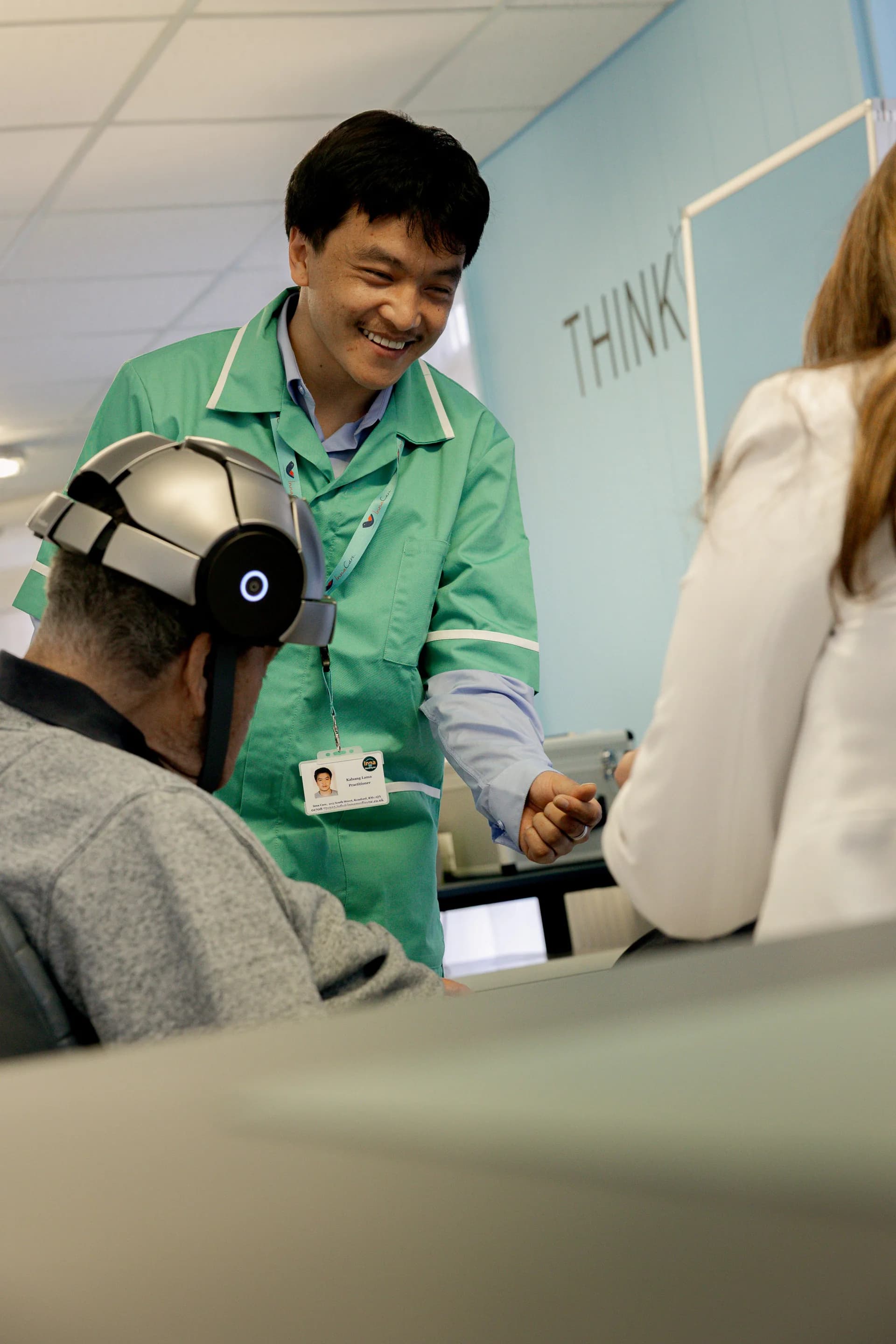
Relaxing 30–40 minute sessions where your brain receives real-time feedback and learns to produce calmer, more balanced patterns of activity.
30–40 min · CalmingProgress Review
Regular assessments track changes in your brainwave patterns and symptom experience. Your protocol is refined as your brain responds to training.
Ongoing · AdaptiveWhat Does the Research Say?
Neurofeedback is a complementary approach and not a replacement for therapy or medication. Please consult your healthcare provider.
Who Can Benefit?
Neurofeedback for anxiety is suitable for adults and adolescents who experience chronic or situational anxiety, stress-related symptoms, or nervous system dysregulation. It can be used as a standalone approach or alongside your existing programme.
Not sure if it's right for you?
Book a private 15-minute phone consultation. Our clinical team will listen carefully and advise whether this is the appropriate path for you.
Frequently Asked Questions
Ready to feel calmer?
Book a QEEG brain map and anxiety consultation at our private Romford clinic. Understand the patterns behind your anxiety — and start training your brain towards balance.