Neurofeedback vs Medication: An Honest Comparison

Comparing Your Options
When you are living with a condition that affects your mental health, focus, or emotional regulation, the question of how to address it can feel overwhelming. For many people in the UK, the first conversation happens with their GP, and the most familiar path leads to medication — a well-established route backed by decades of research.
But it is not the only route. Over the past two decades, neurofeedback has emerged as a credible, evidence-informed option for conditions ranging from ADHD and anxiety to sleep difficulties and depression. Rather than presenting these as opposing choices, this article aims to help you understand both approaches so you can make a genuinely informed decision about your care.
This article is for informational purposes only. It does not constitute medical advice. Always consult your GP or specialist before making changes to any existing treatment plan.
How Medication Works
Psychiatric and neurological medications work by altering the chemistry of the brain. They adjust levels of neurotransmitters — the chemical messengers that neurons use to communicate. Different classes of medication target different systems:
- SSRIs (such as sertraline) increase serotonin availability, commonly prescribed for depression and anxiety
- Stimulants (such as methylphenidate) enhance dopamine and norepinephrine activity, widely used for ADHD
- Benzodiazepines enhance the effect of GABA, a calming neurotransmitter, used for acute anxiety
- Mood stabilisers regulate neural excitability across broader networks
Medication can be highly effective. For many people, it provides rapid relief from symptoms that significantly impair quality of life. It is well-regulated, extensively researched, and accessible through the NHS.
Considerations with medication
Medication works for as long as you take it. In most cases, symptoms return if the medication is discontinued — meaning it manages symptoms rather than resolving their underlying cause. Side effects vary between individuals and drugs, ranging from mild (drowsiness, dry mouth) to more significant (weight changes, emotional blunting, dependency risks). Finding the right medication and dosage often involves trial and adjustment.
How Neurofeedback Works
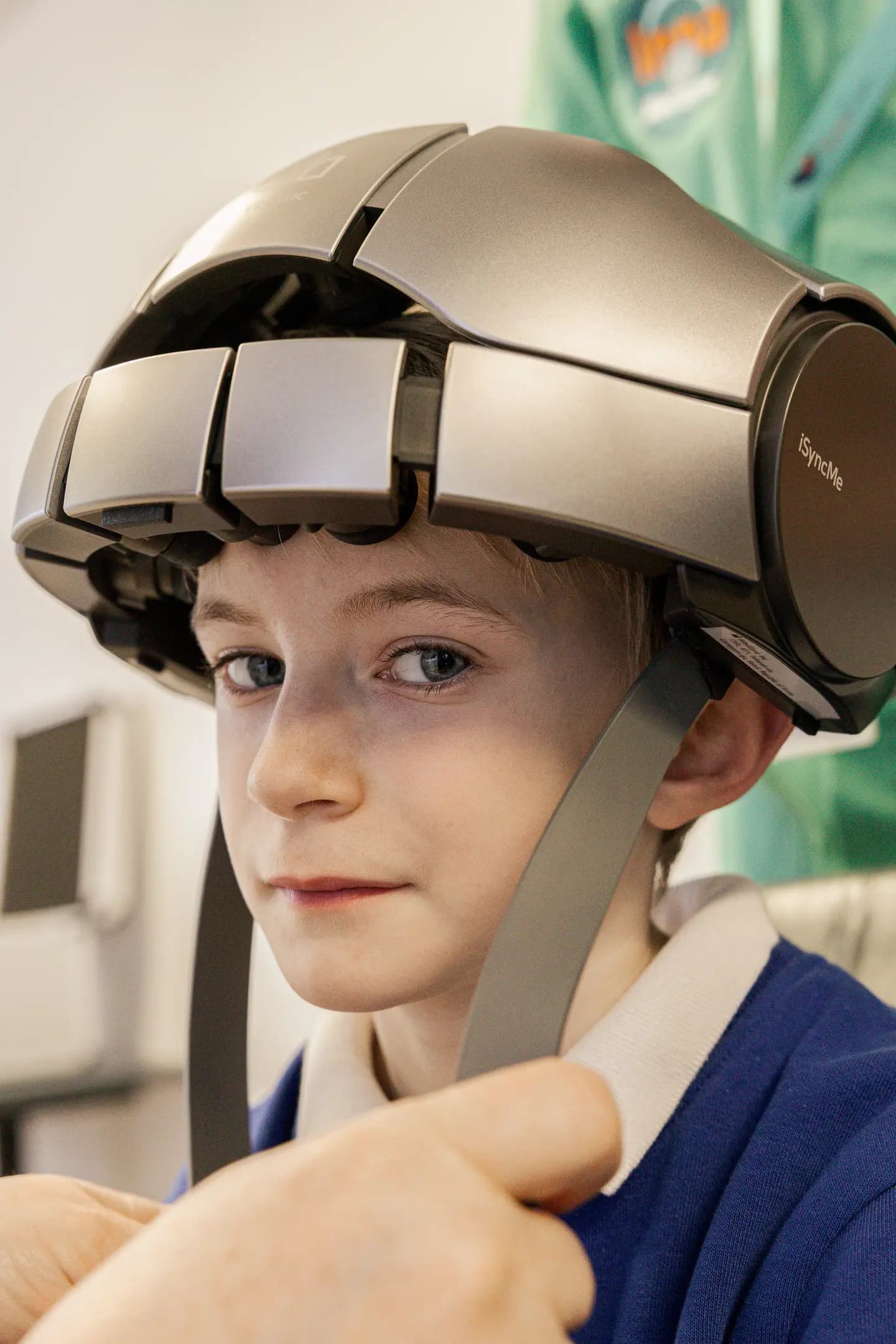
Where medication alters brain chemistry, neurofeedback works with the brain's electrical activity. Sensors placed on the scalp monitor your brainwave patterns in real time and provide feedback — through a visual or auditory display — that encourages the brain to shift toward more balanced patterns.
The process is grounded in operant conditioning: the brain receives a reward signal when it produces the desired pattern, and over repeated sessions, it learns to sustain that pattern independently. This is a training process in which your brain is an active participant.
A programme typically begins with a QEEG brain map, which identifies the specific areas and frequencies where dysregulation exists. This data informs a personalised training protocol — no two programmes are identical, because no two brains are.
Considerations with neurofeedback
Neurofeedback requires a commitment of time. Programmes typically involve twenty or more sessions over several months, each lasting around sixty minutes. Results build cumulatively rather than appearing immediately. It is not available through the NHS, so there is a financial investment involved. Not every individual responds to the same degree, and evidence strength varies by condition.
Comparing the Approaches
Understanding the fundamental differences between these two approaches can help clarify which might suit your circumstances, values, and goals.
Mechanism
Medication adjusts neurotransmitter levels chemically. Neurofeedback trains the brain's electrical patterns through feedback and repetition. One works on chemistry; the other works on the brain's self-regulation capacity.
Speed of effect
Many medications begin to show effects within days to weeks (though full therapeutic benefit may take longer). Neurofeedback changes tend to emerge gradually over multiple sessions, with many clients noticing meaningful shifts after six to ten sessions.
Duration of benefit
Medication typically requires ongoing use to maintain its effects. Research suggests that the improvements gained through neurofeedback may persist after training ends, because the brain has learned a new pattern rather than being chemically maintained in one. Studies on ADHD neurofeedback, for example, have shown sustained benefits at six-month and twelve-month follow-ups after training completion.
Side effects
Medication carries a well-documented range of potential side effects, varying by drug class and individual response. Neurofeedback is generally considered to have a very low side-effect profile. Some clients report temporary fatigue or mild headaches following sessions, which typically resolve quickly.
Personalisation
Medication prescribing involves selecting from available drugs and adjusting dosage based on response. Neurofeedback protocols are designed from individual brain mapping data, targeting the precise frequencies and locations identified in your QEEG assessment.
Can They Work Together?
This is perhaps the most important question, and the answer is: yes, they often can. Neurofeedback and medication are not mutually exclusive. In fact, many clients begin neurofeedback whilst continuing their existing medication, working with their prescribing doctor to monitor progress and make adjustments as appropriate.
We never advise clients to stop or reduce medication. Any changes to medication should always be made in consultation with your prescribing GP or psychiatrist.
Some individuals find that as their neurofeedback programme progresses, they are able to discuss medication adjustments with their doctor. Others find that the combination of both approaches provides the best outcome. There is no single correct path — the right approach is the one that works for you, guided by professional clinical advice.
Research published in Frontiers in Human Neuroscience suggests that neurofeedback may complement pharmacological treatment by addressing aspects of brain function that medication alone does not target — particularly in conditions like ADHD, where both neurochemical and neuroelectrical factors play a role.
Making an Informed Choice
The decision between medication, neurofeedback, or a combination is deeply personal. It depends on your condition, its severity, your previous experiences with treatment, and your values regarding healthcare.
What matters most is that you have access to clear, balanced information — and feel empowered to explore your options without pressure in any direction.
Questions Worth Considering
- How long have I been experiencing these symptoms, and how significantly do they affect my daily life?
- Have I tried medication before? What was my experience with side effects and effectiveness?
- Am I looking for long-term management or a training approach that aims for lasting change?
- Am I comfortable with a commitment of several months for a neurofeedback programme?
- Would I prefer to explore a non-pharmacological option first, or use it alongside my current treatment?
- What does my GP or specialist recommend, and are they open to a combined approach?
There are no wrong answers. These questions are simply a framework for honest self-reflection as you consider what is right for you.
For a broader overview of common questions about neurotherapy, our frequently asked questions page covers many of the practical concerns clients raise before beginning a programme.
Explore Your Options With Us
At Inna MediSync, we believe in informed choice. We recognise the value of medication and its place in healthcare. What we offer is an additional option: a personalised, data-driven approach to brain training that many clients find transformative, whether used independently or alongside existing treatment.
If you would like to understand what neurofeedback could look like for your specific situation, our team at our private Romford clinic is happy to have that conversation openly and without obligation. Contact us to arrange an initial consultation or simply learn more about how neurotherapy works in practice.
Inna MediSync Clinical Team
Neurotherapy Specialists
The Inna MediSync clinical team brings together certified neurotherapy practitioners with expertise in QEEG brain mapping and neurofeedback. Every article is reviewed for clinical accuracy and reflects our commitment to evidence-informed practice.
Continue Reading

Ready to Explore Neurotherapy?
Take the first step towards understanding your brain. Book a free consultation with our clinical team.