
Sleep Problems? Your Brain May Hold the Answer

The Sleep Crisis: Why So Many of Us Struggle
Sleep difficulties are remarkably common. The NHS estimates that one in three people in the UK experiences regular problems with sleep, ranging from difficulty falling asleep to frequent night-time waking and early morning alertness that refuses to return. For many, this is not simply a matter of poor habits or a busy mind at bedtime — it is a neurological pattern that has become deeply ingrained.
What most people find frustrating is that they know they are tired. They want to sleep. Yet their brain seems to have other plans entirely. This disconnect between exhaustion and the inability to rest often points to something deeper than lifestyle factors alone: a dysregulation in the brain's own electrical activity.
Your Brain and Sleep Architecture
Healthy sleep is not a single state. It is a carefully orchestrated sequence of stages — light sleep, deep slow-wave sleep, and REM (rapid eye movement) sleep — each governed by specific brainwave patterns. Delta waves dominate deep restorative sleep. Theta waves characterise the transition into sleep and the dreaming phases of REM. Alpha waves help you wind down during relaxation before sleep onset.
When these patterns operate in their natural rhythm, sleep feels effortless. You drift off within fifteen to twenty minutes, move through each stage in predictable cycles, and wake feeling genuinely rested. But when the brain's electrical activity is out of balance, this architecture can become fragmented or disrupted at any point in the cycle.
How Brain Dysregulation Disrupts Sleep
Research suggests that many persistent sleep difficulties share a common feature: excessive fast-wave (beta) activity at times when the brain should be slowing down. In practical terms, this means your brain remains in a state of alertness or vigilance even as your body prepares for rest.
This can manifest in several recognisable ways:
- Difficulty falling asleep — the mind races, replaying the day or anticipating tomorrow, unable to transition from beta into the slower alpha and theta states
- Frequent waking — the brain cycles back into lighter, more alert stages too often, disrupting the deeper phases of sleep
- Unrefreshing sleep — even after a full eight hours, insufficient time in deep slow-wave sleep leaves you feeling groggy and unrested
- Early morning waking — heightened cortical arousal pulls you out of sleep prematurely, typically between 3am and 5am
These are not simply behavioural issues. They reflect measurable patterns in the brain's electrical output — patterns that can be identified and, importantly, addressed.
What a Brain Map Reveals About Your Sleep
A QEEG brain map provides a detailed picture of your brain's electrical activity across nineteen sites on the scalp. For individuals with sleep difficulties, this assessment often reveals telling patterns: elevated high-beta activity in the frontal regions (associated with rumination and an inability to "switch off"), reduced theta or delta production, or an imbalance between the left and right hemispheres that contributes to emotional arousal at bedtime.
A brain map does not diagnose a sleep disorder. What it does is show us precisely where and how the brain's electrical activity deviates from healthy norms — giving us a clear starting point for personalised training.
This objective, data-driven approach is what distinguishes neurofeedback-based neurotherapy from generalised sleep advice. Rather than prescribing the same recommendations to everyone, training is guided by your brain's unique profile.
How Neurofeedback Can Improve Sleep
Neurofeedback works by providing the brain with real-time feedback on its own activity. During a session, sensors placed on the scalp monitor brainwave patterns whilst you watch a visual display or listen to audio cues. When your brain produces the desired pattern — for example, increased theta activity or reduced high-beta — the feedback responds positively. Over time, the brain learns to reproduce these patterns more readily on its own.
Studies published in journals including Applied Psychophysiology and Biofeedback and Clinical EEG and Neuroscience have shown that neurofeedback training can lead to measurable improvements in sleep onset latency, sleep continuity, and subjective sleep quality. A 2019 meta-analysis found that neurofeedback demonstrated significant effects on insomnia symptoms, with improvements often sustained at follow-up assessments months after training concluded.
Many clients at our centre report noticing changes within the first four to six sessions. These typically begin with subtle shifts — falling asleep a few minutes faster, waking less frequently, or feeling marginally more rested in the morning — before building into more consistent, lasting improvements as the training programme progresses.
What to Expect During Your Programme
At Inna MediSync, every sleep-focused programme begins with a comprehensive brain mapping session. This ninety-minute assessment establishes your baseline brainwave patterns and identifies the specific areas of dysregulation contributing to your sleep difficulties.
Based on these findings, a personalised training protocol is developed. Sessions are typically scheduled once or twice per week, lasting around sixty minutes each. During each session, you sit comfortably whilst the neurofeedback system provides gentle, non-invasive feedback to your brain.
There is nothing to "do" in the conventional sense. The brain responds to the feedback naturally, gradually shifting its patterns toward more balanced activity. Most clients describe the sessions as relaxing — some even feel drowsy afterwards, which can be an encouraging early sign of the brain recalibrating its sleep-wake regulation.
Programme Options
For sleep-related concerns, we typically recommend beginning with a six-session programme to assess initial response, with many clients progressing to twelve or twenty sessions depending on the complexity and duration of their sleep difficulties. Your clinician will review progress at regular intervals and adjust the protocol as your brain map evolves.
Practical Tips Alongside Neurotherapy
Whilst neurofeedback addresses the neurological dimension of sleep, there are complementary steps that can support your progress throughout the programme:
- Consistent timing — aim to go to bed and rise at the same time each day, including weekends, to reinforce your circadian rhythm
- Light management — expose yourself to bright natural light in the morning and reduce blue light exposure from screens in the two hours before bed
- Temperature — a cooler bedroom (around 16–18°C) supports the natural drop in core body temperature that signals sleep onset
- Stimulant awareness — caffeine has a half-life of approximately five hours; consider a midday cut-off
- Wind-down routine — a consistent pre-sleep routine signals to your brain that the transition to rest is approaching
These strategies work best in combination with neurofeedback — the behavioural adjustments support the neurological changes, and vice versa. Neither approach in isolation is likely to be as effective as both together.
Always consult your GP or specialist before starting any new therapy, particularly if you have been diagnosed with a sleep disorder or are currently taking medication for sleep.
Take the First Step Toward Better Sleep
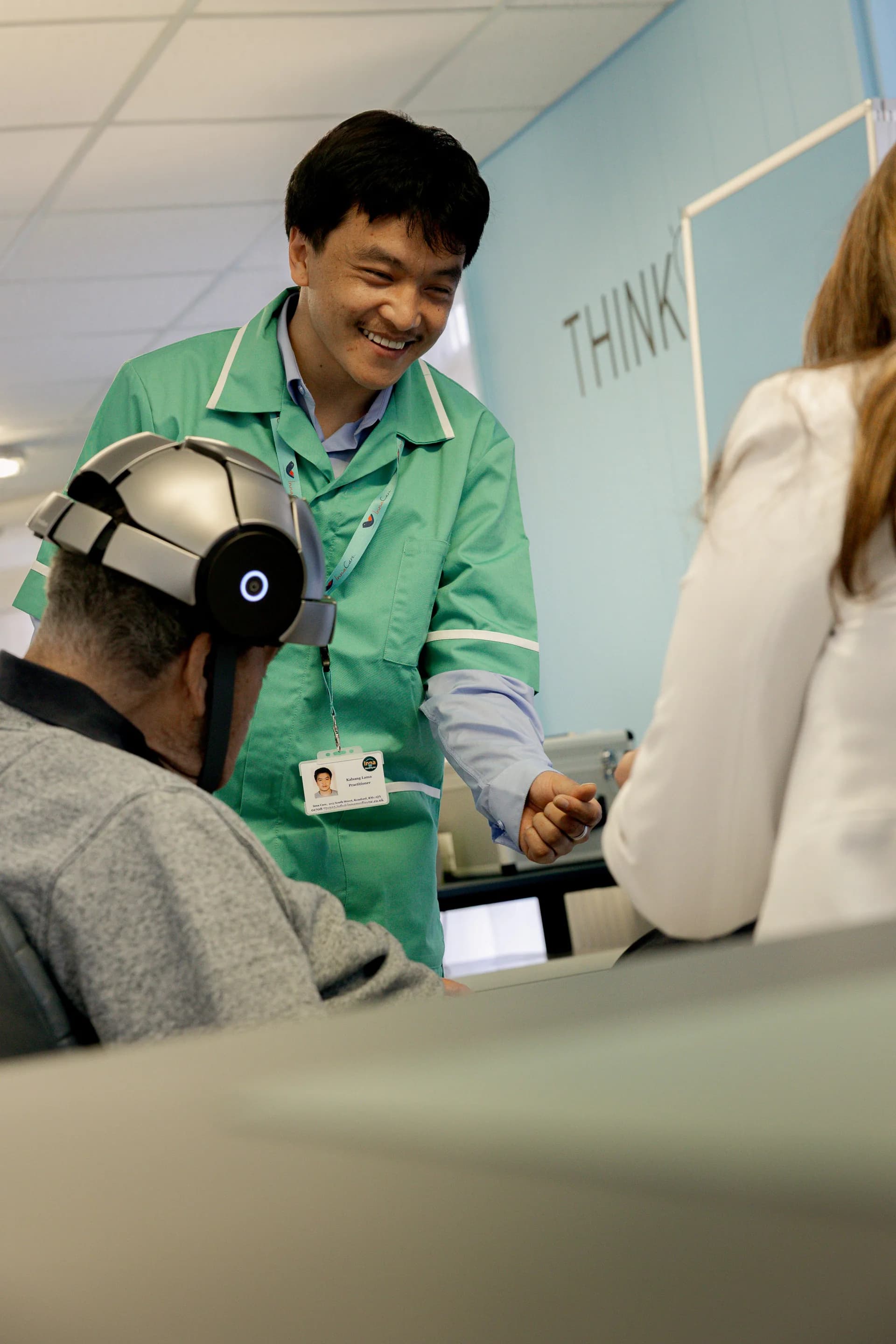
Photobiomodulation (PBM Care) is another approach we use at Inna MediSync to support sleep health. By delivering near-infrared light through the iSyncMe device, PBM Care targets brain cell energy production and may help regulate neurological patterns associated with poor sleep. It works well alongside neurofeedback as part of an integrated brain health programme.
If poor sleep has become your normal, it does not have to remain that way. A QEEG brain map can reveal the specific patterns behind your sleep difficulties, and a personalised neurofeedback programme can help your brain relearn the rhythms of healthy, restorative rest.
Get in touch with our team at Inna MediSync in Romford, Essex to book your initial consultation. We welcome clients from across London and are here to help you understand whether neurotherapy may be the right approach for your sleep concerns.
Inna MediSync Clinical Team
Neurotherapy Specialists
The Inna MediSync clinical team brings together certified neurotherapy practitioners with expertise in QEEG brain mapping and neurofeedback. Every article is reviewed for clinical accuracy and reflects our commitment to evidence-informed practice.
Continue Reading

Ready to Explore Neurotherapy?
Take the first step towards understanding your brain. Book a free consultation with our clinical team.