The Science Behind iSyncMe Technology
Why Technology Matters in Neurotherapy
Neurotherapy has come a long way from its early days. Where practitioners once relied on single-channel systems and subjective interpretation, modern clinical practice demands precision, repeatability, and evidence. The technology behind a neurotherapy programme shapes the accuracy of assessment, the specificity of training protocols, and ultimately, the outcomes clients experience.
At Inna MediSync, we have built our practice around the iSyncMe system because it meets the standard we believe every client deserves: research-grade brain mapping combined with sophisticated analysis that removes guesswork from the equation.
The iSyncMe System: Research-Grade Brain Mapping
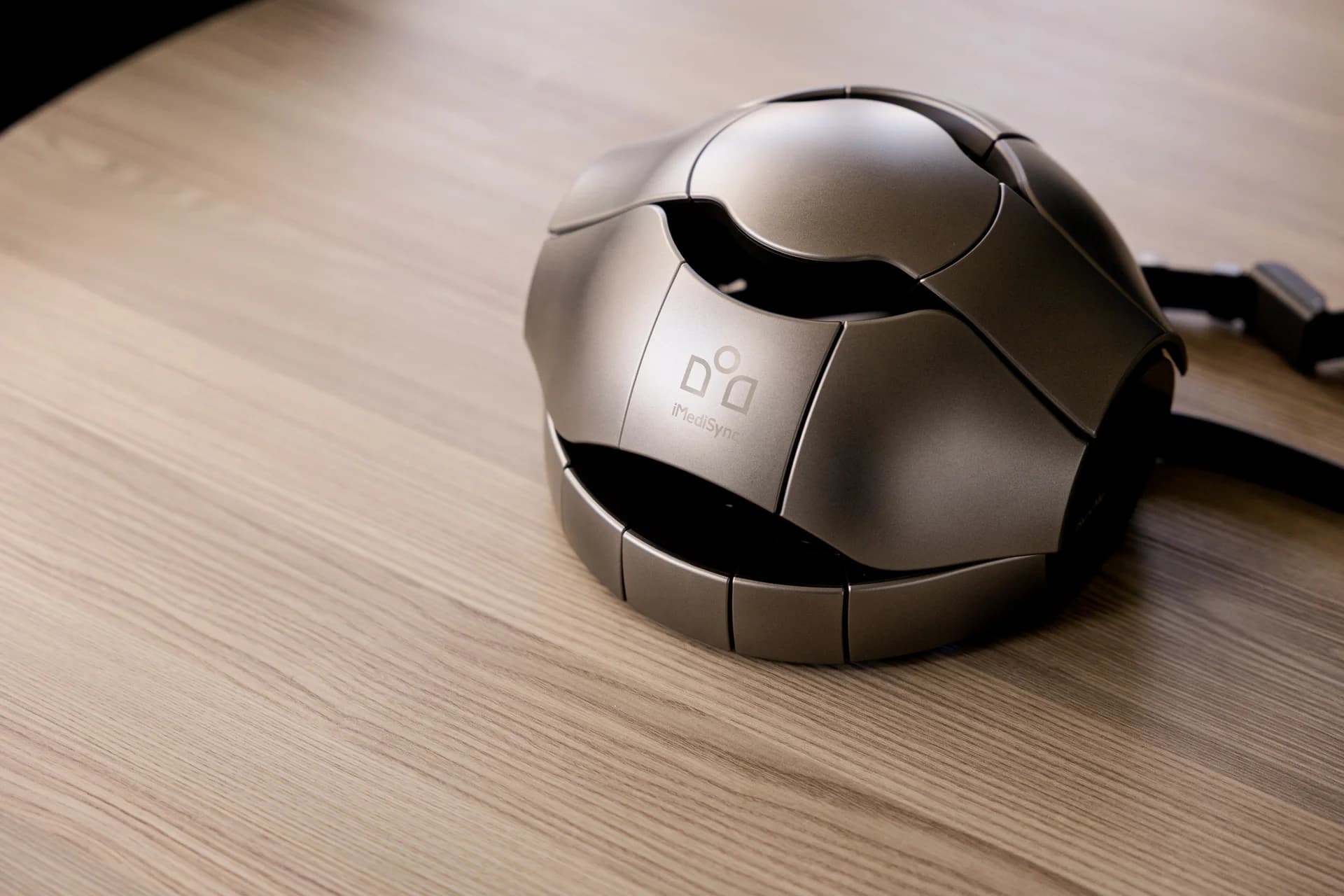
The iSyncMe system, developed by iSyncBrain, is one of the most advanced quantitative electroencephalography (qEEG) platforms available to clinicians today. It integrates a CE-certified EEG recording device with iSyncBrain, a cloud-based analysis platform that processes brainwave data against extensive normative databases.
What sets this system apart from consumer-grade devices is its clinical validation. The iSyncMe platform has been the subject of peer-reviewed research and is used in clinical and research settings internationally. This matters because the quality of a brain mapping assessment is only as good as the technology capturing and interpreting the data.
A brain map is not a photograph — it is a dynamic, data-rich portrait of how your brain functions in real time. The technology that captures it determines how much of that portrait you actually see.
19-Channel EEG: Seeing the Whole Brain
One of the most important specifications of any EEG system is how many channels it uses. A channel corresponds to an electrode placed on the scalp that records electrical activity from the brain region beneath it. More channels mean a more complete picture of brain function.
The iSyncMe system uses 19 active channels. Many consumer neurofeedback devices use between one and four. While these can detect broad patterns, they cannot capture the complex interplay between different brain regions. A 19-channel system allows clinicians to examine:
- Regional activity — how each area of the brain is performing individually
- Connectivity patterns — how different regions communicate with one another
- Coherence — whether brain regions are working together efficiently or in isolation
- Asymmetries — imbalances between hemispheres that research has linked to mood, attention, and cognitive processing
This level of detail is what makes truly personalised neurofeedback protocols possible, rather than generic, one-size-fits-all approaches.
The International 10/20 System
The 19 electrodes follow the International 10/20 system, a standardised placement method that has been the gold standard in clinical EEG since the 1950s. Electrodes are positioned at intervals of 10% and 20% of the measured distance between anatomical landmarks on the skull.
This standardisation matters for two reasons. First, it ensures recordings are comparable across sessions — so when we track progress over months, we measure exactly the same regions each time. Second, data recorded at Inna MediSync can be meaningfully compared against international normative databases, because everyone uses the same reference framework.
Electrode sites and their significance
Each site corresponds to a known cortical region. Frontal sites (Fp1, Fp2, F3, F4, F7, F8, Fz) relate to executive function and emotional regulation. Central sites (C3, C4, Cz) correspond to sensorimotor processing. Temporal sites (T3, T4, T5, T6) are associated with language, memory, and auditory processing. Parietal (P3, P4, Pz) and occipital (O1, O2) sites relate to sensory integration and visual processing.
The iSyncBrain Analysis Platform
Raw EEG data requires sophisticated signal processing before it becomes clinically useful. iSyncBrain is a cloud-based engine that processes recordings through several stages:
- Artefact detection and removal — filtering out signals from eye blinks, muscle tension, or electrical interference
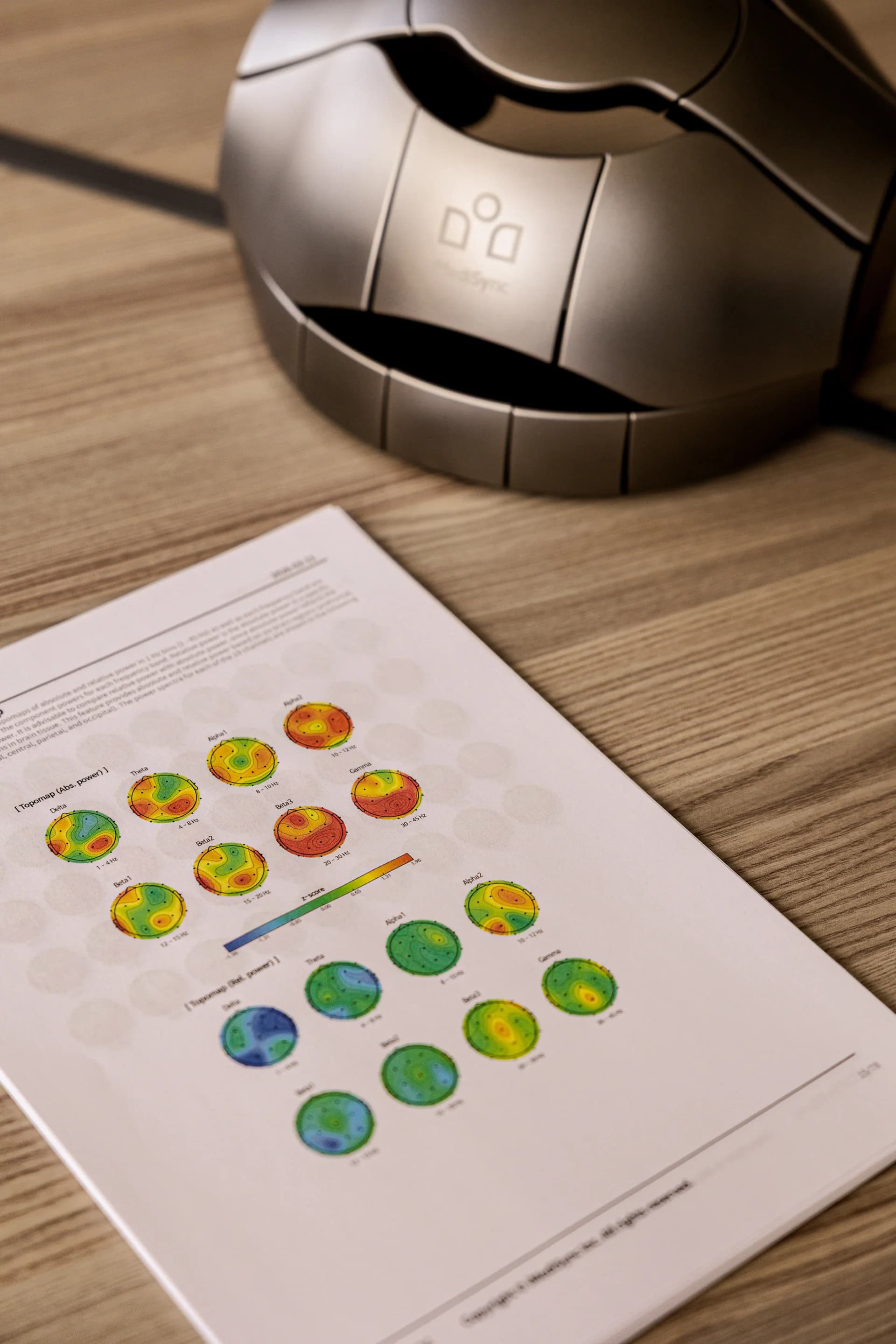
- Frequency band analysis — breaking the signal into component frequencies (delta, theta, alpha, beta, gamma) and mapping their distribution
- Statistical comparison — comparing individual patterns against age-matched normative data
- Connectivity analysis — examining how effectively different brain regions communicate
- Report generation — producing detailed, colour-coded brain maps for clinical review
The automated artefact rejection is particularly valuable. Manually cleaning EEG data is time-consuming and subject to human error. iSyncBrain's algorithms handle this consistently, improving both efficiency and reliability.
Normative Databases: Your Brain in Context
A brain recording only becomes meaningful in context. Normative databases consist of EEG recordings from thousands of healthy individuals across age groups, creating a statistical baseline for typical brain activity at each stage of life.
When your brain map is compared against this data, the analysis highlights where your patterns fall outside the expected range. Elevated high-beta activity may be associated with anxiety; elevated theta-to-beta ratios in frontal regions have been extensively studied in the context of attention difficulties.
Importantly, deviations from the norm are not automatically pathological. The normative comparison provides data points for clinical interpretation — it does not generate diagnoses.
Clinical Validation and Research
Research suggests that quantitative EEG analysis, when performed with validated systems and interpreted by trained clinicians, provides valuable insights that complement other clinical assessments. Studies have examined qEEG reliability in contexts ranging from attention-deficit conditions to mood disorders, sleep disturbances, and cognitive decline.
Technology does not replace clinical expertise — it enhances it. The most sophisticated brain map in the world still requires a skilled clinician to interpret what it means for each individual.
How We Use This Technology at Inna MediSync
At our centre, the iSyncMe device forms the foundation of every client's journey. The iSyncMe delivers 19-channel EEG neurofeedback and integrated Transcranial Photobiomodulation (PBM Care) through one device — with each protocol delivered in separate, dedicated sessions for a fully personalised approach to brain health.
We begin with a comprehensive brain mapping session, recording a full 19-channel EEG. The recording is uploaded to iSyncBrain for analysis, and the resulting brain map is reviewed in detail during a dedicated consultation. From there, the data directly informs each client's personalised programme — whether neurofeedback, tPBM, or a combination of both. Progress is tracked through follow-up brain maps, allowing both clinician and client to see objective evidence of change over time.
Take the first step
If you are curious about what your brain map might reveal, or if you want to understand how our technology-driven approach could support your goals, we would welcome the opportunity to talk with you. Get in touch with our Romford clinic to book your initial consultation and discover what a comprehensive brain assessment looks like in practice.
Inna MediSync Clinical Team
Neurotherapy Specialists
The Inna MediSync clinical team brings together certified neurotherapy practitioners with expertise in QEEG brain mapping and neurofeedback. Every article is reviewed for clinical accuracy and reflects our commitment to evidence-informed practice.
Continue Reading

Ready to Explore Neurotherapy?
Take the first step towards understanding your brain. Book a free consultation with our clinical team.